
Kansas Data Centers: A Candid Chamber Conversation
By Jamie Green, Southern regional director
When it comes to data centers, one of the key questions for Kansas policymakers is how to add enough new generation and grid capacity. That includes utility-scale solar, wind farms, and battery energy storage systems to help keep electricity affordable and reliable for customers.
In July, Lawrence, Kansas, approved a two-year moratorium on large-scale data centers in town and a staff study to determine longer-term code changes. The pause opened space for broader conversations about what data centers could mean for Lawrence and the surrounding region.
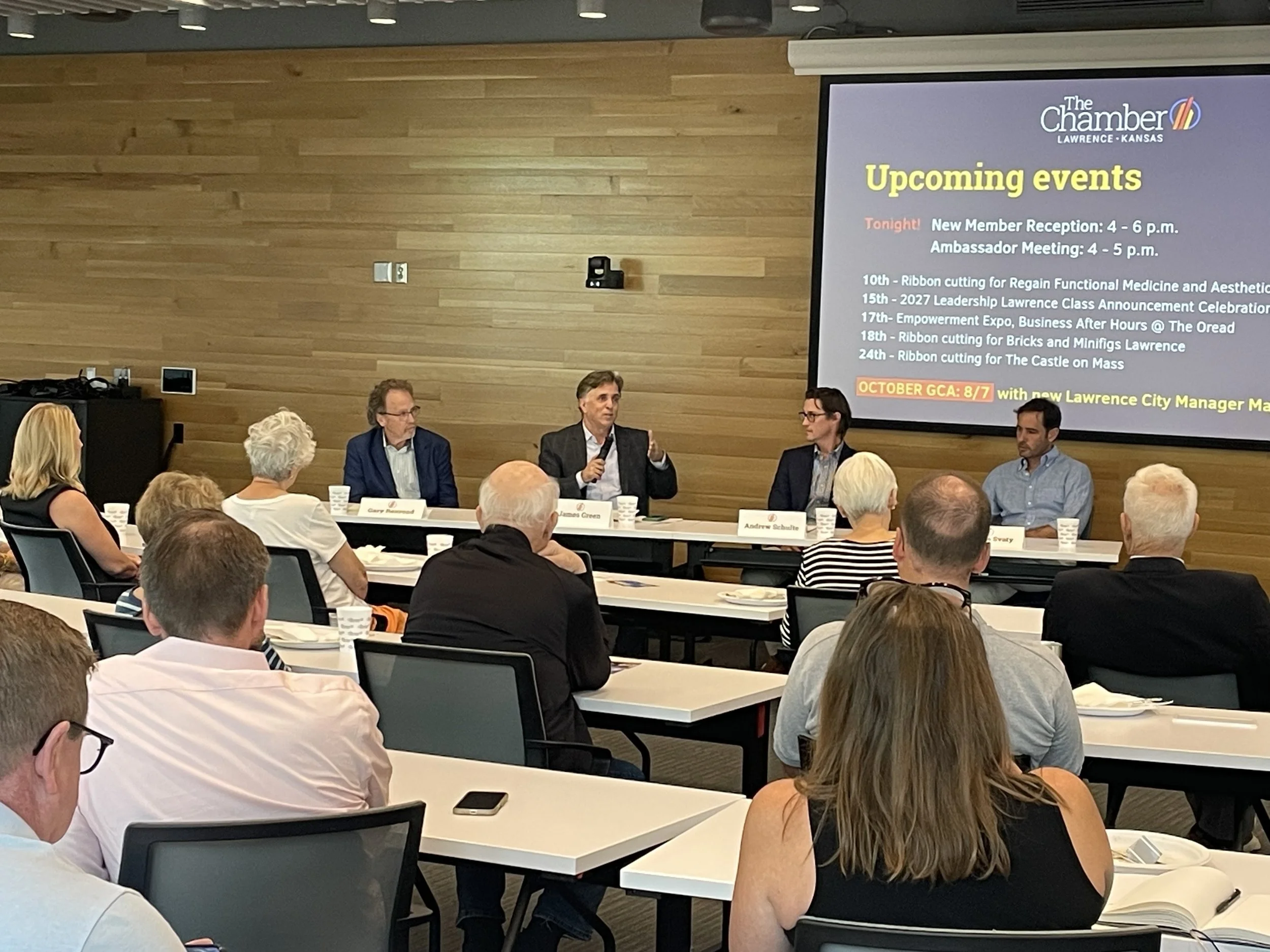
This fall, I took part in a panel discussion hosted by The Lawrence Chamber of Commerce, Kansas about the potential benefits and drawbacks of attracting data center projects to the city. The chamber’s Government & Community Affairs luncheon included an educational update on data centers for approximately 70 local business leaders.
The other panelists included:
Joshua Svaty, a former four-time Kansas state representative, former Kansas secretary of agriculture and farmer;
Andrew Schulte, energy attorney with the law firm Polsinelli;
Gary Rexroad, Lawrence-Douglas County planning commissioner and former Microsoft executive.
I noted that some Texas data centers run on renewable energy, such as Soluna Holdings’ Project Kati, a planned 166-megawatt, wind-powered data center campus in Willacy County. That project connects directly to the wind farm next door, tapping excess wind energy that would otherwise sit idle.
Of course, not every data center can be conveniently located next to a wind farm. That’s why conversations about powering data centers and their broader economic and infrastructure implications are needed at the community level. Other chambers can follow the Lawrence Chamber’s lead by convening candid stakeholder discussions on data centers, just as many already do for wind and solar siting.
To help frame these discussions, CICE’s brief, Data Centers: Balancing Economic Benefits and Resource Demands, defines the types of data centers, weighs their economic benefits against infrastructure challenges, and examines the policy debate over tax incentives.
