
Why Chambers Matter in a Changing Economy
By Jennifer Reiser, Director of Operations
If your chamber disappeared tomorrow, what would your community lose?
That’s the question I posed in my opening keynote at the Colorado Chamber Alliance Annual Conference in Grand Junction in October 2026. The answer reaches far beyond events, networking, ribbon cuttings, advocacy, or member services. Communities would lose a convener. A connector. A trusted voice. A place where business leaders come together to understand change, solve problems, and shape what comes next.
At Chambers for Innovation and Clean Energy (CICE), we see this role becoming even more important as communities navigate a rapidly changing economy. New industries are emerging. Energy markets are shifting. Businesses are deciding where to locate and grow. Communities are weighing questions about infrastructure, workforce, land use, tax base, energy reliability, and long-term competitiveness. Chambers are often right in the middle of those conversations.
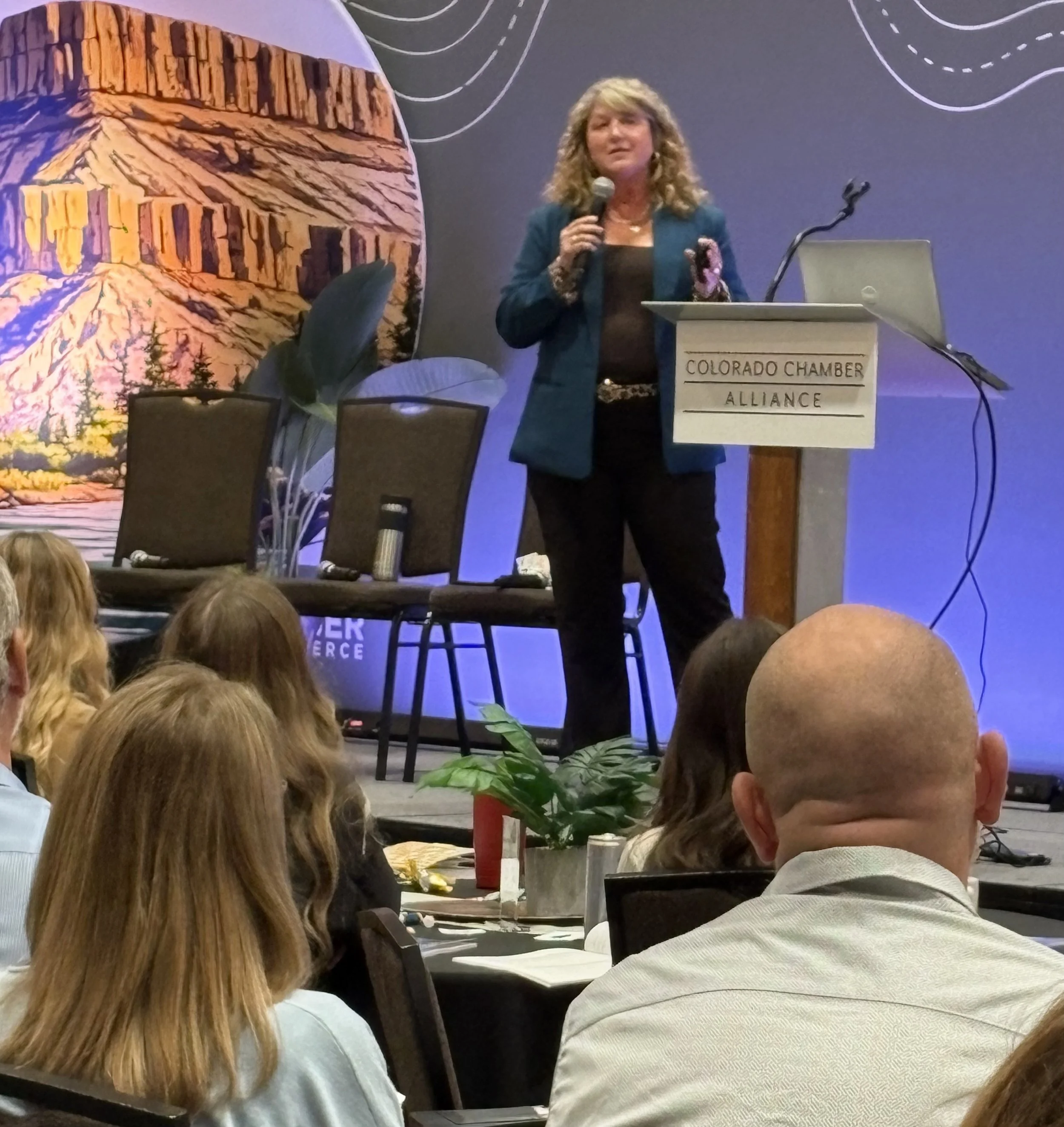
I encouraged chamber leaders to lean into five areas of leadership:
Collaboration
Chambers are uniquely positioned to bring together businesses, economic developers, local governments, utilities, educators, nonprofits, and community leaders.
Trust
When new opportunities emerge, communities need places where people can learn, ask questions, and understand what those opportunities may mean locally. Chambers do not need to have all the answers, but they do need to listen, connect people with credible information, and create productive conversations when perspectives differ. This is how chamber leaders build trust.
Collective action
Businesses may not have the time or resources to follow every legislative issue, infrastructure proposal, regulatory change, or economic development project. Chambers help identify shared priorities, communicate with policymakers, and advocate for conditions that support business growth.
Foresight and confidence
Successful chamber leaders must look beyond what is directly in front of them. Automation, artificial intelligence, workforce shortages, energy costs, advanced manufacturing, data centers, electrification, supply chains, and infrastructure are already reshaping regional economies. Communities that begin these conversations early will be better prepared for what comes next.
Transformation and influence
Clean energy belongs in these economic conversations. Decisions about energy generation, transmission, storage, and emerging technologies are increasingly connected to where companies invest and expand. Chambers should be prepared to ask good economic questions about jobs, tax base, workforce, infrastructure, local business opportunities, and community concerns.
This is why chambers matter.
I opened my presentation with a question, and I will close with one for you: Where does your community need someone to bring people together right now?
