CHAMBERS IN ACTION

Local chambers across the country are taking the lead in creating and convening clean energy conversations, best practices, events and advocating on local policy.

Jennifer Zajac Jennifer Zajac

Greenwood Chamber’s Clean Energy Growth Creates Jobs for Local Workers
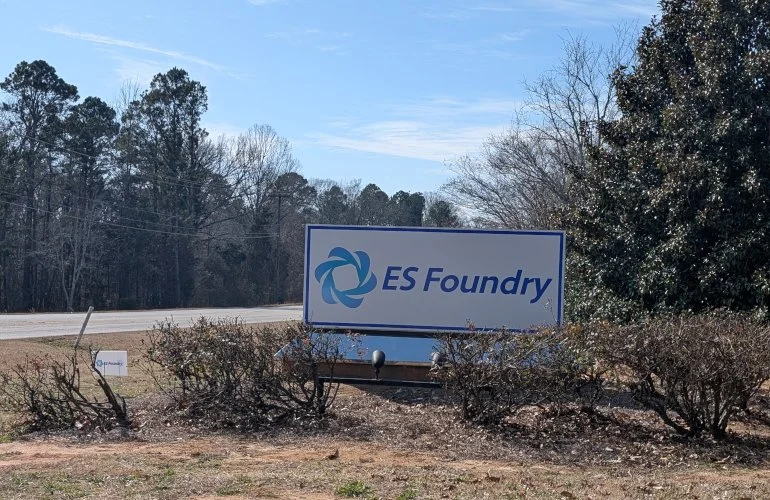
When a major employer closes, the impact on a community can be significant. In Greenwood, South Carolina, the arrival of a growing clean energy manufacturer helped provide new opportunities for local workers facing an uncertain future

Just as ES Foundry, a manufacturer supplying the utility-scale solar industry, ramped up operations in Greenwood, another local manufacturer announced its closure, putting hundreds of employees out of work.

The timing created an opportunity to connect experienced manufacturing workers with new jobs. The Greenwood Chamber of Commerce joined other community and workforce development partners in supporting efforts to help displaced employees find new roles. Partners held multiple job fairs at the closing facility, bringing together ES Foundry, Piedmont Technical College, other hiring companies, and additional workforce resources.

“We’re excited about the investment and jobs ES Foundry is bringing to Greenwood,” said Trentsie Williams, president and CEO of the Greenwood Chamber of Commerce. “By manufacturing American-made solar components right here in our community, ES Foundry is creating opportunities for local workers while strengthening our nation’s domestic energy supply chain. It’s exciting to know that what’s being made in Greenwood will have an impact far beyond our community.”

ES Foundry hired many of the displaced workers, helping retain experienced manufacturing talent in the Greenwood area. Williams estimates the company now employs 400 to 500 people and is preparing for another expansion that will create more jobs.

For Greenwood, ES Foundry's growth demonstrates how clean energy manufacturing supports local economies, creates jobs, and strengthens American manufacturing. It also emphasizes the value of partnerships among businesses, chambers, and workforce development partners in connecting local talent with new opportunities.

Read More
Chambers for Innovation Chambers for Innovation

An Ohio Clean Energy Economy Emerges Delivering Steady Job Growth

The clean energy sector is one of Ohio’s leading employers. In fact, “More than twice as many Ohioans work in clean energy than the number of lawyers, accountants, auditors, web developers, and real estate agents combined.”

Clean energy jobs in Ohio span a wide range of industries including energy efficiency, renewables, advanced transportation, grid and storage, and clean fuels. As a whole, the clean energy sector, according to this year’s Clean Jobs Midwest analysis published by the Clean Energy Trust and E2, represents more than 103,000 jobs in the Buckeye State. Energy efficiency makes up 71 percent of the state’s clean energy related jobs while advanced transportation, building on previous years' increases, saw a 3 percent jobs increase. This makes advanced transportation the state’s fastest growing clean energy sector as companies like GM and Ford make significant commitments to electric vehicles (EVs).

No surprise, the COVID-19 pandemic had a negative impact on clean energy jobs across the nation in 2020, with Ohio specifically, losing 10,951 clean energy jobs, representing the first decline in years. State policy also had an impact on the decline, unfortunately. Ohio’s House Bill 6, which eliminated energy efficiency standards, can be attributed to Ohio’s biggest drop in the energy efficiency industry, totaling 9,874 jobs. 

Despite the pandemic and adverse state policies, the industry saw a dramatic bounce back, growing 10.1 percent the second half of the year, rebounding quicker than the overall Ohio workforce. 

Small towns in Ohio are big winners in the clean energy industry, with more than 15,700 jobs located in rural areas. Additionally, as chambers well know, small businesses typically make up the majority of its membership directories and clean energy follows that same model. Small businesses helped fuel the state’s clean energy sector last year, with 62 percent of Ohio’s clean energy businesses employing fewer than 20 people. 

The transition to a clean energy economy in Ohio is expected to steadily grow providing good-paying opportunities for job seekers, including those in underserved communities. Additionally, chamber member businesses from start-ups to the largest employers will benefit from cost saving programs as well as the ability to purchase low-cost, state-generated renewable energy. 

  • Read more about the entire Midwest’s clean energy jobs here.
If you would like to learn more about clean energy opportunities in your community, please contact Susan Munroe.
‌
Read More

