
Great Falls Development Alliance Shows How EDOs Can Lead on Energy Business Development
Economic development organizations (EDOs) are increasingly on the front lines of one of the biggest factors shaping business growth: energy. As companies look for places to expand, questions around reliability, cost, capacity, and speed to deploy infrastructure are becoming central to site selection and investment decisions.
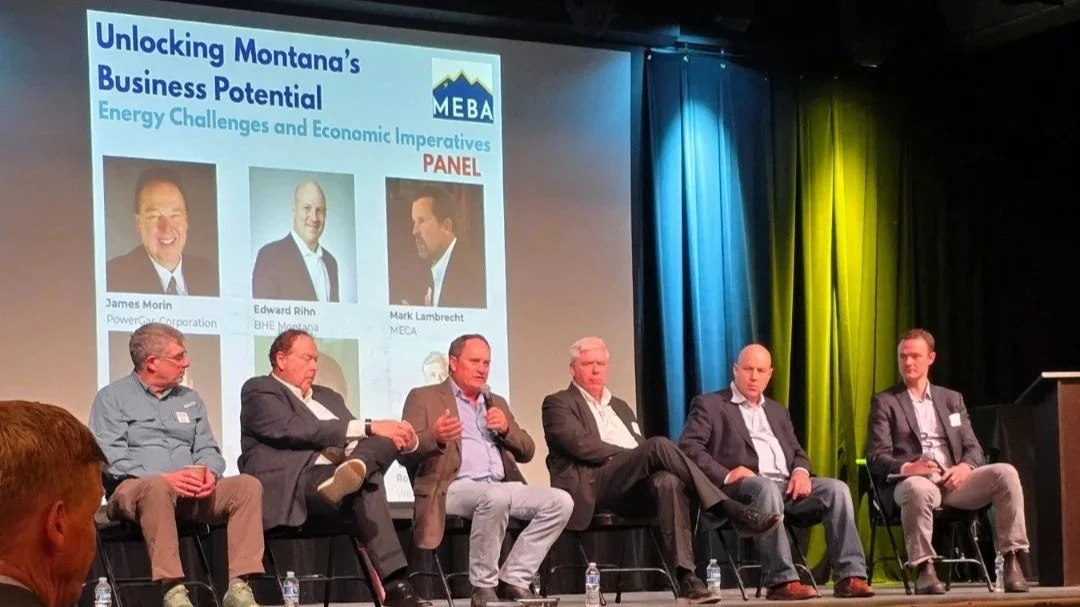
The Great Falls Development Alliance (GFDA), in conjunction with the Montana Energy Business Alliance (MEBA), offered a clear example of how EDOs can step into this role. At an April 2026 event, they brought together business leaders, utility representatives, and infrastructure voices for a focused discussion on what Montana needs to remain competitive for investment.
Kyle Unruh, Montana & Idaho Director at Renewable Northwest, facilitated the panel conversation, which featured Brett Doney of Great Falls Development Alliance, Ed Rihn of Berkshire Hathaway Energy Montana, Jim Morin of PowerGas Corp, Rob Worden of Vision Net, and Tom Pankeatz of NorthWestern Energy. Together, they addressed the issues many business communities are facing right now: reliability, affordability, capacity, transmission, pipeline constraints, regional market access, and the speed at which infrastructure can move from concept to reality.
“Energy infrastructure is key to support existing businesses but also to make us competitive to attract more,” said Brett Doney, president and CEO, GFDA and Treasurer, MEBA. “Great Falls Development Alliance (GFDA) is the only economic development organization in Montana with a full-time energy business development officer.”
That distinction reflects a broader strategy. GFDA serves the Great Falls, Montana Metropolitan Statistical Area (MSA) and a 13-county rural and tribal trade region, and it has made energy a core part of its business development approach. This strategy aligns with MEBA’s work to bring together business and energy leaders to advance policies and investments that sustain Montana’s industries, strengthen communities, and deliver reliable, affordable energy. This leadership is key in a place like Great Falls, where energy has long been part of the region’s identity and economic foundation. Hydropower helped build the community and earned it the name “Electric City.” Today, that legacy continues in the region in new forms through wind, solar, battery storage, sustainable aviation fuel production, transmission opportunities, and the broader infrastructure needed to support business growth. GFDA’s approach recognizes that energy is not a separate issue—it is a prerequisite for growth.
GFDA connected these issues to the day-to-day work of economic development and led a strategic business conversation grounded in the realities employers face and the opportunities the region wants to capture.
Other chambers and EDOs can learn from this example. Energy leadership doesn’t require technical expertise alone—it requires convening the right stakeholders, grounding conversations in business impacts, and treating energy as a core economic development priority. Done well, this approach strengthens regional alignment and gives business communities a more credible voice in conversations about infrastructure, growth, and competitiveness.